
Quick Answer
December 2025 Update
From May 1, 2026, Australian battery rebates are changing in two ways:
- 1.Base rate drops 19%: From 8.4 to 6.8 STCs per kWh (affects all batteries)
- 2.New tiered structure: 0-14kWh gets 100%, 14-28kWh gets 60%, 28-50kWh gets 15%
On December 13, 2025, the federal government announced these changes to the Cheaper Home Batteries Program. Also announced:
- 6-monthly reductions: Rebates now decrease twice per year, not annually
- Program expanded: $7.2 billion in funding (up from $2.3 billion)
Source: DCCEEW | Official STC Schedule (Excel)
Analysed by Battery IQ Energy Team | Last updated: 14 December 2025
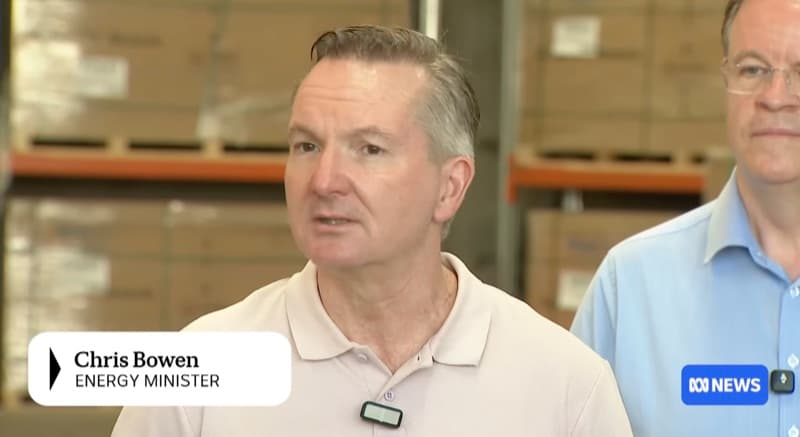
"Australia is a solar nation - we've got more solar on our roofs than pools in our backyards, and we want to match that success with home batteries to cut bills for everyone, for good."
- Chris Bowen, Minister for Climate Change and Energy, December 13, 2025
What Did the Minister Not Mention?
In his announcement, Minister Bowen highlighted the tiered structure for larger batteries. However, the official DCCEEW documentation reveals an additional change: the base STC factor is also being reduced from 8.4 to 6.8 from May 2026.
Prior to this announcement, the STC factor was scheduled to remain at 8.4 for all of 2026. The new schedule drops it to 6.8 in May - a 19% reduction that affects all battery sizes, not just larger systems.
Key Takeaways (At a Glance)
What's Changing
- - 19% base rate cut (8.4 to 6.8 STCs)
- - Tiered structure penalises 14kWh+ batteries
- - 6-monthly reductions (was annual)
- - Effective May 1, 2026
What You Lose by Waiting
- - 13.5kWh battery: $821 less (19%)
- - 19.2kWh battery: $1,707 less (28%)
- - 25.6kWh battery: $2,756 less (34%)
- - Bigger battery = bigger hit
When Do the 2026 Battery Rebate Changes Take Effect?
The battery rebate is changing in stages. Here are the key dates you need to know:
| Period | STC Factor | Structure | What It Means |
|---|---|---|---|
| Jan 1 - Apr 30, 2026 | 8.4 STCs/kWh | Flat rate | Last window before tiering |
| May 1 - Dec 31, 2026 | 6.8 STCs/kWh | Tiered | New tiered structure begins |
| Jan 1 - Jun 30, 2027 | 5.7 STCs/kWh | Tiered | Further reduction |
| Jul 1 - Dec 31, 2027 | 5.2 STCs/kWh | Tiered | 6-monthly drops continue |
Key Takeaway
January to April 2026 is the last window to install at the flat rate before tiering kicks in. After May 1, larger batteries (15kWh+) will see significantly reduced rebates.
How Does the New Tiered Battery Rebate Structure Work?
From May 1, 2026, the government is changing how rebates are calculated. Instead of a flat rate per kWh, larger batteries will receive progressively less support:
100%
0 - 14 kWh
Full STC rate applies
6.8 STCs per kWh
60%
14 - 28 kWh
Reduced rate for this portion
4.08 STCs per kWh
15%
28 - 50 kWh
Minimal support above 28kWh
1.02 STCs per kWh
How Is the Tiering Calculated?
The tiering is cumulative. A 20kWh battery does not get 60% across the board - it gets:
- First 14kWh: 100% of the STC rate (6.8 STCs/kWh)
- Next 6kWh: 60% of the STC rate (4.08 STCs/kWh)
This means batteries under 14kWh (like a Tesla Powerwall 3) only face the base rate reduction, while larger systems get a double hit.
How Much Less Will I Get? Real Battery Examples
At Battery IQ, we calculated the exact impact for popular batteries. All prices are battery RRP only - installation costs are additional (typically $2,000-4,000).
Tesla Powerwall 3 (13.5kWh)
Battery RRP: ~$11,900 (Gateway additional ~$1,700)
Under 14kWh threshold - gets 100% rate
| Install Period | Calculation | Rebate | Net Battery Cost |
|---|---|---|---|
| Jan - Apr 2026 | 13.5 x 8.4 = 113 STCs | $4,309 | $7,591 |
| May - Dec 2026 | 13.5 x 6.8 = 92 STCs | $3,488 | $8,412 |
Waiting until May costs you: $821
Sungrow SBR 19.2kWh (6 modules)
Battery RRP: ~$11,500
Crosses into 60% tier - tiering applies
| Install Period | Calculation | Rebate | Net Battery Cost |
|---|---|---|---|
| Jan - Apr 2026 | 19.2 x 8.4 = 161 STCs | $6,131 | $5,369 |
| May - Dec 2026 | (14 x 6.8) + (5.2 x 4.08) = 116 STCs | $4,424 | $7,076 |
Waiting until May costs you: $1,707
Summary: How Much Less Rebate by Battery Size
| Battery | Capacity | Jan-Apr Rebate | May-Dec Rebate | You Lose |
|---|---|---|---|---|
| Powerwall 3 | 13.5kWh | $4,309 | $3,488 | -$821 (19%) |
| Sungrow SBR | 12.8kWh | $4,086 | $3,308 | -$778 (19%) |
| Sungrow SBR | 19.2kWh | $6,131 | $4,424 | -$1,707 (28%) |
| Sungrow SBR | 25.6kWh | $8,172 | $5,416 | -$2,756 (34%) |
The Pattern
- Under 14kWh: ~19% rebate reduction
- 14-20kWh: ~28% rebate reduction
- 20-28kWh: ~34% rebate reduction
- 28kWh+: ~40%+ rebate reduction
The bigger the battery, the bigger the hit from May 1.
Should I Rush to Install Before the Rebate Drops?
If you are ready to install now
Your battery must be commissioned before April 30, 2026 to lock in the flat rate before tiering kicks in. Commissioning is when the electrical certificate is signed, not when you order or when installation begins. At Battery IQ, we recommend allowing 4-8 weeks from order to commissioning. This is especially valuable for larger battery systems (15kWh+).
If you are still researching
Do not rush a bad decision for $800-2,000. A poorly sized system, wrong installer, or suboptimal energy plan will cost you more over time than the rebate difference. Read the next section.
If you are not ready
That is OK. Battery prices continue to fall, and the program runs until 2030. The next section explains why getting your overall setup right matters more than timing the rebate perfectly.
Why Does Your Energy Plan Matter More Than Rebate Timing?
You are focusing on the wrong thing.
If you are stressed about rebate deadlines, here is the uncomfortable truth: your choice of energy plan alone will save or cost you more over 10 years than any rebate timing decision.
And that is just one piece. What you really need is a partner who looks at whole-of-house electrification - your battery, solar, hot water, heating/cooling, EV charging, and energy plan working together. That is where the real savings are.
A Tale of Two Battery Owners
Person A: Chased the Rebate
- Installed Jan 2026 (best rebate)
- Rebate received: $4,309
- Stayed on flat tariff energy plan
- Annual electricity bill: ~$900
- 10-year electricity: $9,000
Person B: Optimised the System
- Installed June 2026 (lower rebate)
- Rebate received: $3,488
- Switched to smart time-of-use tariff
- Annual electricity bill: ~$300
- 10-year electricity: $3,000
Person A "saved" $821 on the rebate.
Person B saved $6,000 on electricity over 10 years.
Person B is $5,179 better off.
What Actually Moves the Needle?
The rebate is a one-time benefit. These savings compound every year:
| Optimisation | Typical Annual Savings | 10-Year Value |
|---|---|---|
| Right energy plan (TOU vs flat tariff) | $400 - $700 | $4,000 - $7,000 |
| Hot water timing with solar | $200 - $400 | $2,000 - $4,000 |
| Smart EV charging | $300 - $600 | $3,000 - $6,000 |
| VPP participation | $100 - $400 | $1,000 - $4,000 |
The Bottom Line
The difference between the Jan-Apr and May-Dec 2026 rebate is $821 - $2,756 depending on battery size. That is a one-time difference.
The difference between a well-optimised and poorly-optimised home energy setup is $500 - $1,500 per year, compounding over 10-15 years.
Do not sacrifice long-term savings by rushing a decision for short-term rebate gains.
Can I Stack State and Federal Rebates in 2026?
The federal rebate can be combined with some state programs. Here is the current landscape:
Western Australia
State rebate $130/kWh (up to 10kWh) stacks with federal. Best combined savings.
South Australia
REPS VPP incentive (up to $2,050) stacks with federal.
New South Wales
VPP incentive ($40-55/kWh) stacks with federal.
Victoria, Queensland, Tasmania, NT, ACT
Federal rebate only. State programs closed or not available.
Frequently Asked Questions
What are the 2026 battery rebate changes in Australia?
From May 1, 2026, two major changes take effect: (1) A new tiered structure where batteries 0-14kWh get 100% of the STC rate, 14-28kWh get 60%, and 28-50kWh get just 15%. (2) The base STC factor drops from 8.4 to 6.8, a 19% reduction affecting all battery sizes. At Battery IQ, we calculate this means $821-$2,756 less rebate depending on battery size.
How much less rebate will I get if I wait until May 2026?
At Battery IQ, we calculated the exact impact: For batteries under 14kWh (like Tesla Powerwall 3), you lose about 19% or $821. For larger batteries, the tiering compounds the loss: a 19.2kWh system loses $1,707 (28%), and a 25.6kWh system loses $2,756 (34%). The bigger the battery, the bigger the hit from May 1.
What did the government not mention about 2026 battery rebate changes?
Minister Chris Bowen announced the tiered structure for larger batteries but did not publicly mention the 19% base rate cut from 8.4 to 6.8 STCs/kWh. Prior to this December 2025 announcement, the STC factor was scheduled to remain at 8.4 for all of 2026. The rate cut is only visible in the official DCCEEW documentation.
Should I rush to install a battery before May 2026?
Only if you are genuinely ready. At Battery IQ, we advise that a rushed decision with the wrong installer, wrong battery size, or staying on a poor energy plan will cost you more over 10 years than the $821-2,756 rebate difference. Getting your whole-of-house electrification right matters more than rebate timing.
How does the tiered battery rebate structure work from May 2026?
The tiered structure applies to the STC factor cumulatively: 0-14kWh gets 100% (6.8 STCs/kWh), 14-28kWh gets 60% (4.08 STCs/kWh), and 28-50kWh gets just 15% (1.02 STCs/kWh). A 20kWh battery gets full rate on the first 14kWh and 60% on the remaining 6kWh. Batteries under 14kWh only face the 19% base rate reduction.
Why is Australia reducing battery rebates in 2026?
Two reasons: battery prices are falling approximately 10% annually, and the original program was far more popular than expected, with $2.3 billion nearly exhausted in 6 months. The government is expanding funding to $7.2 billion but introducing tiering and faster reductions to ensure 2 million installations by 2030 while maintaining approximately 30% support.
What determines my battery rebate, order date or installation date?
The commissioning date (when the electrical certificate is signed) determines your rebate rate, not when you ordered. If you order in March 2026 but are not commissioned until May, you will get the May rate. At Battery IQ, we recommend allowing 4-8 weeks from order to commissioning.
Do I need to join a VPP to get the federal battery rebate?
No. Your battery must be VPP-capable, but you do not have to join a VPP program for the federal rebate. However, some state rebates (WA, SA, NSW) do require VPP participation. At Battery IQ, our calculator shows which batteries qualify.
Calculate Your 2026 Battery Savings
See exactly what you will pay after rebates - and compare how different energy plans affect your 10-year savings.
Calculate My SavingsResearched and written by Battery IQ Energy Analysts | Sources: DCCEEW, ABC News, Official STC Schedule
Last updated: 14 December 2025