
Get in Touch
Have questions about battery systems or want personalised advice for your home?
Contact Us →Get in Touch
Have questions about battery systems or want personalised advice for your home?
Contact Us →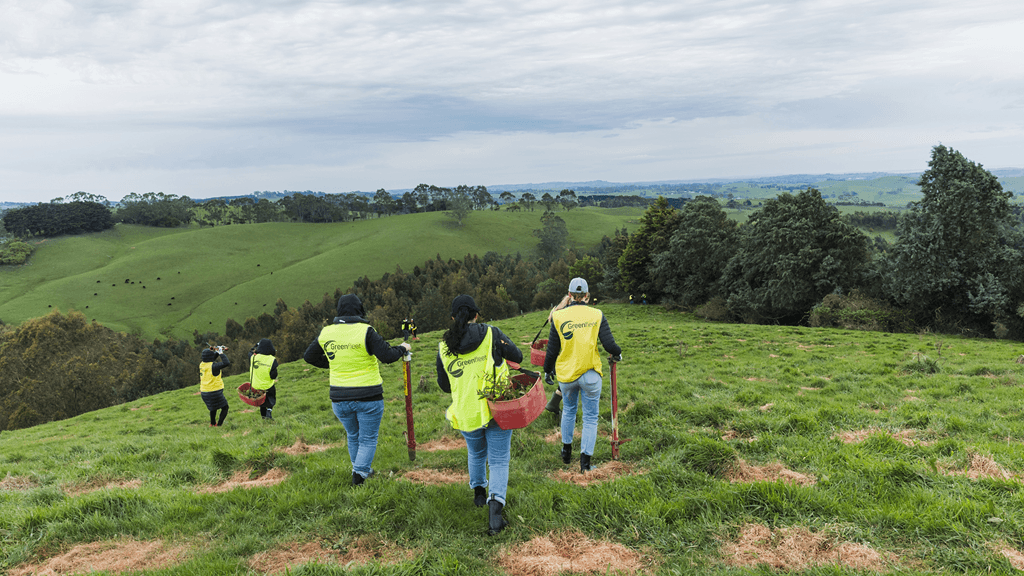
Our Methodology
Full calculations, data sources, and references for every claim we make about our environmental impact.
We believe transparency is more valuable than expensive badges. This page documents our complete methodology for calculating BatteryIQ's environmental footprint, including all assumptions, data sources, and academic references.
If you spot an error or have a question, email hello@batteryiq.com.au.
AI Energy Estimates
Estimating AI energy consumption is challenging because providers don't publish per-query data. We've compiled estimates from multiple independent sources to arrive at our figures.
| Source | Estimate | Notes |
|---|---|---|
| Epoch AI | 0.3 Wh/query | Independent research organisation, pessimistic estimate (Feb 2025) |
| Google (Gemini) | 0.24 Wh/query | Official disclosure, median text query (Aug 2025) |
| Sam Altman (OpenAI) | 0.34 Wh/query | Public statement (2024) |
| MIT Technology Review | ~1 Wh/query | Independent reporting on Llama models (May 2025) |
Our Calculation
We use 1 Wh per query as a conservative upper-bound estimate.
- Customer bill analyses (10,000/year): 10,000 × 5 queries × 1 Wh = 50 kWh
- Platform development: ~100-150 kWh annually (front-loaded during build phase)
- Combined: ~150-200 kWh annually
- Comparison: A typical clothes dryer uses ~3 kWh per load, so this equals 50-70 dryer loads
AI Water Estimates
The "AI uses a bottle of water per query" claim is widely misrepresented. The academic research actually found approximately 500 mL per 20-50 responses, not per query.
| Source | Estimate | Methodology |
|---|---|---|
| Sam Altman (OpenAI) | 0.3 mL/query | Direct data centre cooling only |
| Li et al. (2023) | 10-25 mL/query | Including electricity generation water use |
| Li et al. (2023) | 500 mL per 20-50 queries | Widely cited academic study (often misrepresented as per-query) |
Key insight: Water consumption varies up to 6x depending on data centre location and cooling technology. Google Cloud uses air cooling in many facilities and has committed to being "water positive" by 2030.
Our Calculation
We estimate 5 queries per bill analysis. Our system uses multiple AI models, with lightweight models handling routine parsing tasks and larger models reserved for complex analysis. This efficiency-first architecture significantly reduces our per-query footprint.
Using 10 mL per query (reflecting our blended model usage):
- 100 bill analyses: 100 × 5 queries × 10 mL = 5 litres
Reference: Li, P., Yang, J., Islam, M.A., & Ren, S. (2023). "Making AI Less 'Thirsty': Uncovering and Addressing the Secret Water Footprint of AI Models." University of California, Riverside.
Battery Emissions Calculations
We calculate avoided emissions based on typical battery dispatch patterns and Australian grid emission factors.
| Metric | Value | Source |
|---|---|---|
| Powerwall 3 usable capacity | 13.5 kWh | Tesla product documentation |
| Warranty period | 10-15 years | Tesla warranty terms |
| Annual coal displacement | ~5,000 kWh | Assumption: typical AU household dispatch |
| 15-year displacement | ~75,000 kWh | Calculated: 5,000 × 15 years |
| Grid carbon intensity (AU avg) | 0.5-0.7 kg CO₂/kWh | AEMO NEM data |
| Lifetime avoided emissions | 30,000-50,000 kg CO₂ | Calculated: 75,000 × 0.5-0.7 |
Coal Plant Water Displacement
Coal-fired power plants require significant water for cooling.
- Coal plant cooling water: ~2.5 litres per kWh generated
- 15-year displacement: 75,000 kWh × 2.5 L/kWh = 187,500 litres
Note: Actual avoided emissions vary by household consumption, solar generation, and local grid mix. These figures represent typical Australian conditions.
Return Ratio Calculations
We calculate the environmental "return on investment" from our AI usage, assuming a conservative 1% conversion rate (1 in 100 calculator users installs a battery).
100 Bill Analyses → 1 Battery
The Cost (AI)
- AI queries: 100 × 5 = 500
- Energy: 500 × 1 Wh = 0.5 kWh
- CO₂: 0.5 kWh × 0.5 kg/kWh = 0.25 kg
- Water: 500 × 10 mL = 5 litres
The Return (Battery)
- CO₂ avoided: 30,000-50,000 kg
- Water displaced: 187,500 litres
Carbon Return Ratio
120,000 : 1
Calculation: 30,000 kg ÷ 0.25 kg = 120,000
(Worst-case at 10 Wh/query: 12,000 : 1)
Water Return Ratio
37,500 : 1
Calculation: 187,500 L ÷ 5 L = 37,500
(Worst-case at 50 mL/query: 7,500 : 1)
Infrastructure Provider Sources
We've verified each infrastructure provider's sustainability commitments against their official announcements.
| Provider | Commitment | Source |
|---|---|---|
| Amazon (AWS) | 100% renewable energy matched (2023) | Official announcement → |
| Google Cloud | Carbon neutral since 2007, targeting 24/7 CFE by 2030 | Official announcement → |
| Microsoft (Azure) | Carbon neutral since 2012, carbon negative by 2030 | Official announcement → |
Note: "100% renewable matched" means the provider purchases renewable energy certificates equal to their electricity consumption. "Carbon neutral" includes offsets for remaining emissions. Both represent verified commitments, though methodologies differ.
Operational Footprint
Our estimated annual operational footprint is approximately 1 tonne CO₂e. This includes a conservative buffer for any unmeasured emissions.
| Source | Status | Annual CO₂e |
|---|---|---|
| Coworking space | 5-star NABERS-rated building (selected for environmental rating) | ~0 |
| Remote work | Day-to-day operations | ~0 |
| Business travel | EV charged from renewables | 0 |
| Cloud infrastructure | Carbon-neutral providers | 0 |
| Network transmission | Negligible | ~0 |
| Conservative buffer | Unmeasured/embodied | ~1 tonne |
Note on NABERS: NABERS (National Australian Built Environment Rating System) is Australia's official government-backed rating for building environmental performance. A 5-star rating indicates excellent performance across energy, water, and waste efficiency.
Offset: We've purchased Australian native reforestation credits via Greenfleet matching our estimated footprint.
Full Reference List
[1] Amazon / AWS Renewable Energy
Amazon. "Amazon Meets 100% Renewable Energy Goal—Seven Years Early." About Amazon, 2024.
https://www.aboutamazon.com/news/sustainability/amazon-renewable-energy-goal[2] Google Cloud Carbon-Free Energy
Google Cloud. "Announcing Round-the-Clock Clean Energy for Cloud." Google Cloud Blog.
https://cloud.google.com/blog/topics/inside-google-cloud/announcing-round-the-clock-clean-energy-for-cloud[3] Microsoft Carbon Commitments
Microsoft. "Microsoft will be carbon negative by 2030." Official Microsoft Blog, January 2020.
https://blogs.microsoft.com/blog/2020/01/16/microsoft-will-be-carbon-negative-by-2030/[4] AI Water Footprint Research
Li, P., Yang, J., Islam, M.A., & Ren, S. (2023). "Making AI Less 'Thirsty': Uncovering and Addressing the Secret Water Footprint of AI Models." University of California, Riverside.
[5] Tesla Powerwall Specifications
Tesla. "Powerwall 3 Datasheet." Tesla Energy. (Product documentation for capacity and warranty specifications.)
[6] Australian Grid Emissions Data
AEMO. National Electricity Market emissions data and reports.
https://aemo.com.au/Last updated: January 2026
← Back to Our Carbon Commitment
Questions about our methodology? Email hello@batteryiq.com.au