
Quick Answer
At Battery IQ, we report: gas heater servicing costs $150-$300 (or $243-$330 for ducted systems) and includes carbon monoxide spillage testing. Service every 2 years minimum, annually if over 10 years old. Victoria requires landlords to arrange gas safety checks every 2 years. The safer long-term option: replace with reverse cycle and eliminate CO risk entirely.
Why Is Carbon Monoxide From Gas Heaters So Dangerous?
Carbon monoxide is called the "silent killer" for a reason. You can't see it. You can't smell it. You can't taste it. By the time you realise something's wrong, it may be too late.
The Numbers
- 230+ Australians hospitalised annually from accidental gas and vapour poisoning including carbon monoxide (AIHW 2021-22)
- Faulty gas heaters are a leading cause of household CO poisoning in Australia
- Victorian authorities have banned specific heater models and introduced mandatory rental inspections following deaths
It Keeps Happening
In 2023, a Sydney family of seven - two adults and five children aged 4 to 18 - were hospitalised after a faulty pool heater flue leaked carbon monoxide into their Vaucluse home. The parents returned to find their children in various states of consciousness, suffering headaches and nausea. Fire and Rescue NSW said they were "extremely lucky to be alive."
In 2017, 62-year-old Sonia Sofianopoulos died in her Melbourne public housing unit from an open-flued gas heater. The coronial inquest led to bans on certain heater models and mandatory rental inspections in Victoria.
In 2010, Chase and Tyler Robinson - two young brothers from regional Victoria - died in their sleep from a faulty gas heater. Their mother survived and founded The Chase and Tyler Foundation to prevent other families experiencing the same tragedy.
These aren't isolated incidents. They keep happening because gas appliances age, crack, and fail - often invisibly. Private homeowners have no legal requirement to service their heaters. It's up to you.
How It Happens
Gas heaters work by burning natural gas to produce heat. When combustion is incomplete - due to cracked heat exchangers, blocked flues, dirty burners, or insufficient ventilation - the byproduct is carbon monoxide instead of (relatively) harmless carbon dioxide.
In ducted systems, the heat exchanger separates combustion gases from the air circulating through your home. When that heat exchanger cracks or corrodes, CO leaks directly into your living spaces.
What Does a Dangerous Gas Heater Look Like?
These photos are from my own home. This gas ducted heater had been running in my roof for years. When we finally had it removed, this is what we found.
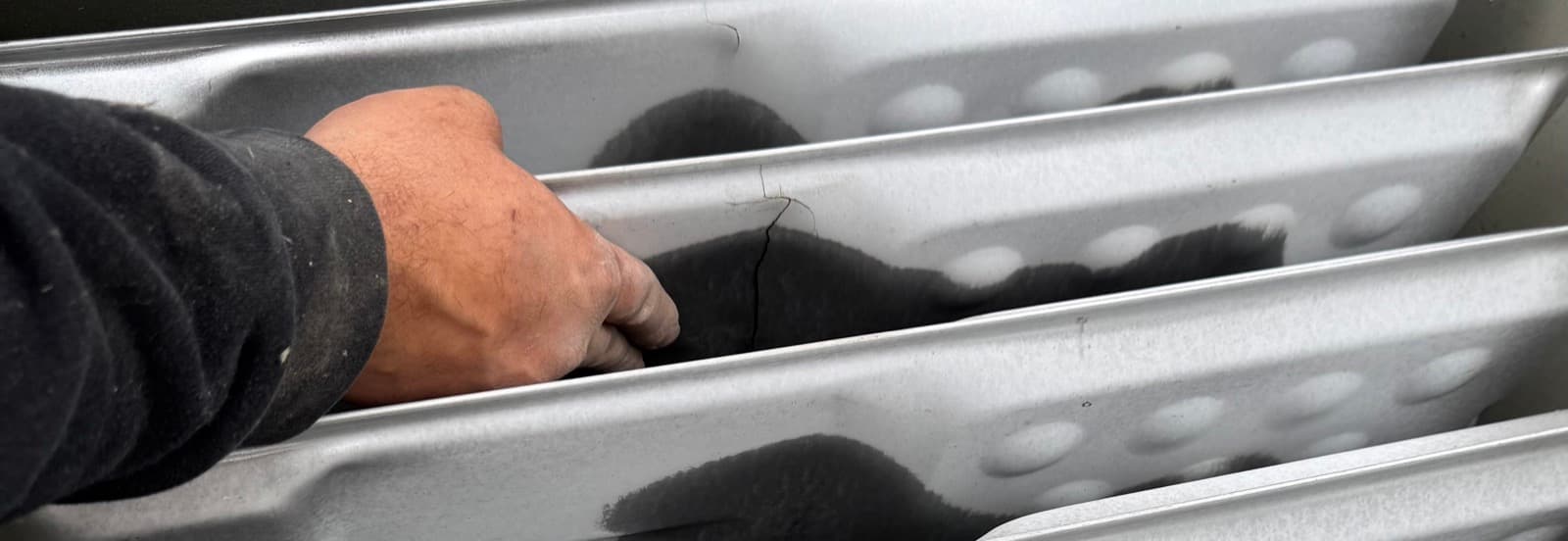
Can You See the Crack?
Look just above the hand. There's a visible crack running diagonally through the metal panel of this heat exchanger. This is the danger - a crack creates a direct pathway for combustion gases (including carbon monoxide) to leak from the burner chamber into the air circulating through your home. The black sooting around it shows where combustion gases have been escaping.
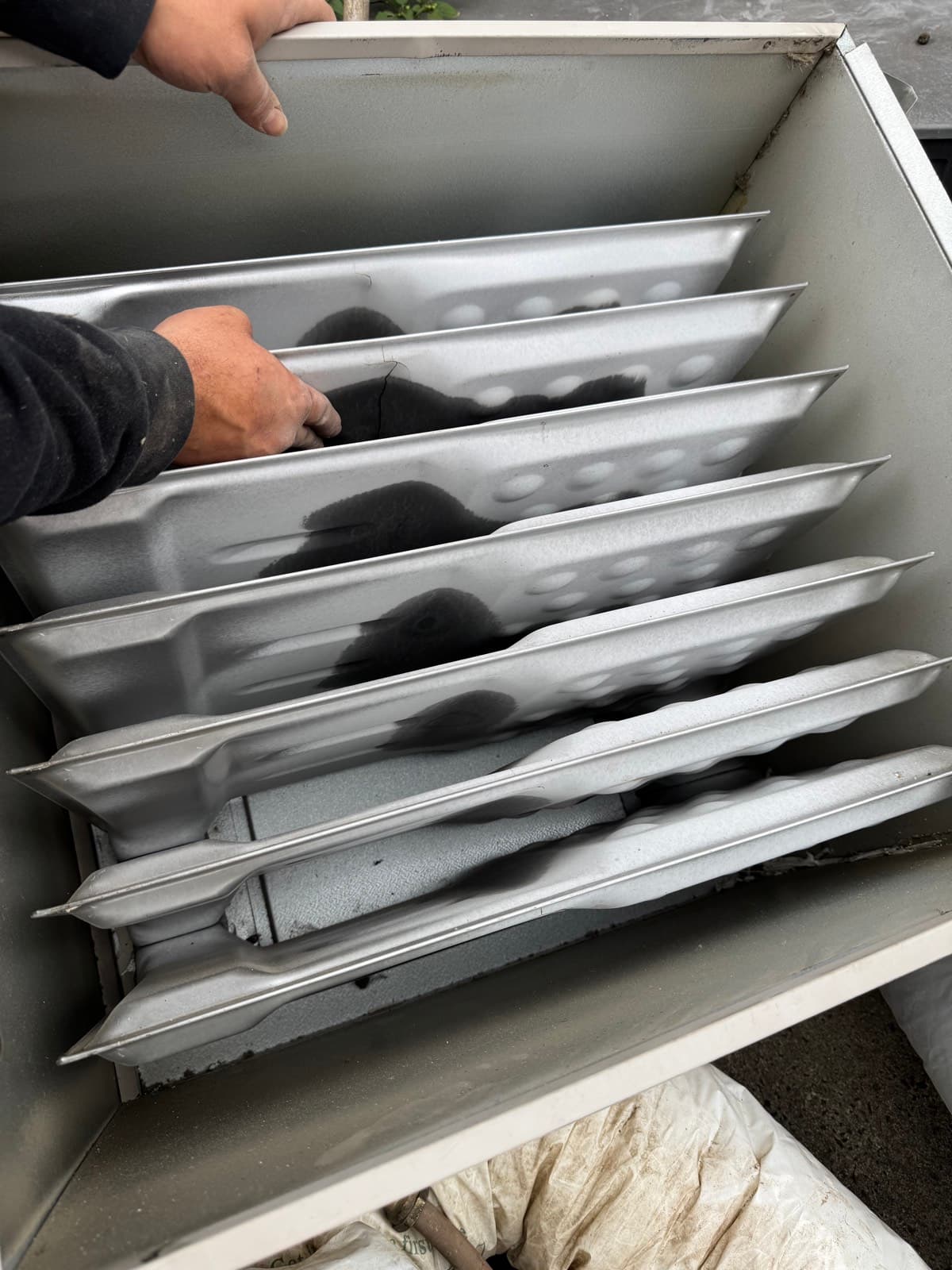
The wider shot shows the full heat exchanger. You can see the crack in context, along with the heavy black carbon deposits across multiple fins - this unit had been struggling for some time, and we had no idea.
You Can't See This From Inside Your House
This is the problem. Your heater sits in the roof or under the floor, out of sight. The warm air comes through your vents and you assume everything's fine. Without professional inspection, you have no way of knowing if your heat exchanger looks like this.
What Are the Warning Signs of Carbon Monoxide Poisoning?
Physical Signs (If You Can Access Your Heater)
- Yellow or orange flames instead of blue (indicates incomplete combustion)
- Black soot around the heater or on walls near vents
- Pilot light that frequently goes out
- Strange smells when the heater runs (though CO itself is odourless)
- Excessive condensation on windows when heating is on
Health Symptoms of CO Poisoning
Carbon monoxide poisoning symptoms are often mistaken for the flu. The difference? They improve when you leave the house and return when you come back.
Symptoms to Watch For
- Headache - often the first sign
- Dizziness or lightheadedness
- Nausea or vomiting
- Confusion or difficulty thinking
- Shortness of breath
- Fatigue and weakness
- Chest pain
- Blurred vision
Critical clue: Multiple family members or pets experiencing symptoms at the same time, especially when the heater is running.
What Are Renters' Rights for Gas Heater Safety?
Rental gas safety legislation varies significantly across Australia. Here's what applies in each state:
Victoria - Strongest Protections
Under the Residential Tenancies Regulations 2021 (effective 29 March 2021), landlords must:
- Arrange a gas safety check every 2 years by a licensed gasfitter
- Include carbon monoxide spillage testing (AS 4575 standard)
- Provide you with the date of the last check on request
- Supply a copy of the safety record within 7 days of your written request
Western Australia
Landlords must provide a gas safety certificate before entering a rental agreement, issued by a licensed gasfitter. The certificate must be included in the lease - tenants can request it if missing.
NSW, Queensland, South Australia, Other States
No mandatory gas safety checks for rental properties. Landlords must maintain premises in safe condition under general tenancy law, but there's no requirement for periodic inspections or certificates. If you're renting in these states, you should request a gas safety check from your landlord in writing - they have a duty of care even without specific legislation.
What To Do If You're Concerned
- Request in writing - Ask your landlord or property manager for a gas safety check, citing their duty to maintain safe premises
- In Victoria - If it's been over 2 years, they're legally required to arrange one. Contact Consumer Affairs Victoria if they refuse
- In other states - Contact your state's fair trading or tenancy authority if the landlord refuses a reasonable safety request
- If you suspect CO exposure - Don't wait for anyone. Turn off the heater, ventilate your home, and seek medical attention immediately
Reference: Energy Safe Victoria - Residential Tenancy Gas Requirements
How Much Does Gas Heater Servicing Cost?
Unlike renters, homeowners have no legal requirement to service their gas heaters. But you'd be crazy not to.
| Service Type | Cost | Includes CO Test? |
|---|---|---|
| Standard gas heater service | $150 - $300 | Yes |
| Ducted system service | $243 - $330 | Yes |
| Your life | Priceless | - |
What a Service Includes
- Visual inspection of heat exchanger for cracks and corrosion
- Burner cleaning and adjustment
- Flue inspection and testing
- Gas pressure checks
- Carbon monoxide spillage testing
- Safety controls verification
How Often?
Every 2 years minimum. Annually if your heater is over 10 years old or you've noticed any warning signs. The service cost is a fraction of a hospital visit - let alone the alternative.
Consider a CO Alarm
A carbon monoxide alarm ($50-$150) provides an extra layer of protection. Install it near bedrooms and the heater. It's not a substitute for professional servicing, but it could wake you up before it's too late.
Should You Replace Your Gas Heater With Electric?
A service buys you time. But here's the thing: gas heating is now more expensive to run than efficient electric, and you'll need to keep paying for services every 2 years for the life of the unit.
The smarter move? Replace your gas heater with a reverse cycle system:
Why Switch to Electric?
- No carbon monoxide risk - reverse cycle systems don't burn fuel
- Save $500-1,000/year on running costs vs gas
- Up to $5,530 in VIC rebates through the VEU program
- Cooling included - one system for year-round comfort
- Pair with solar + battery for near-zero running costs
We've written a complete guide on this: Gas Heating Replacement: The $1,000/Year You're Wasting
If your heater is over 15 years old or needs significant repairs, replacement often makes more financial sense than ongoing maintenance - especially with current rebates.
What Should You Do If You Suspect CO Poisoning?
If You Suspect CO Poisoning
- 1. Turn off the heater immediately
- 2. Open all doors and windows
- 3. Get everyone (including pets) outside
- 4. Call 000 if anyone is unwell
- 5. Don't re-enter until cleared by professionals
Key Contacts (National)
| Emergency (ambulance, fire) | 000 |
| Poisons Information Centre (national, 24/7) | 13 11 26 |
| Gas leaks/emergencies (national) | 1800 GAS LEAK (1800 427 532) |
State Gas Safety Regulators
| VIC | Energy Safe Victoria - 1800 652 563 |
| NSW | Fair Trading NSW - 13 32 20 |
| QLD | Office of Fair Trading - 13 74 68 |
| SA | Office of the Technical Regulator - (08) 8226 5500 |
| WA | Building and Energy - 1300 489 099 |
The Bottom Line
$150-300 for a service. Or free if you're renting. There's no excuse not to know whether your heater is safe. Book a service before winter, or better yet - look into replacing your gas heater entirely and eliminate the risk forever.
Content reviewed by Battery IQ Energy Analysts | Sources: Energy Safe Victoria, AIHW, Fire and Rescue NSW, The Chase and Tyler Foundation | Last updated: December 2025
Ready to Ditch Gas Heating?
See how much you could save by switching to reverse cycle - and how solar + battery can make your heating virtually free.